
Share

Demand refers to the amount of electrical power needed at a specific time. Rather than being about monthly consumption, demand reflects the maximum power needed at any given time. For example, if you turn on several high-energy-consuming appliances simultaneously, such as the heater, oven and washing machine, your demand at that moment spikes.
Peak demand, our highest need, impacts the cost of wholesale power. We must have enough capacity to meet the power demand of all homes and businesses, even when that demand spikes. For Wiregrass ElectricCooperative, this peak occurs consistently from 6 to 9 a.m. during winter.
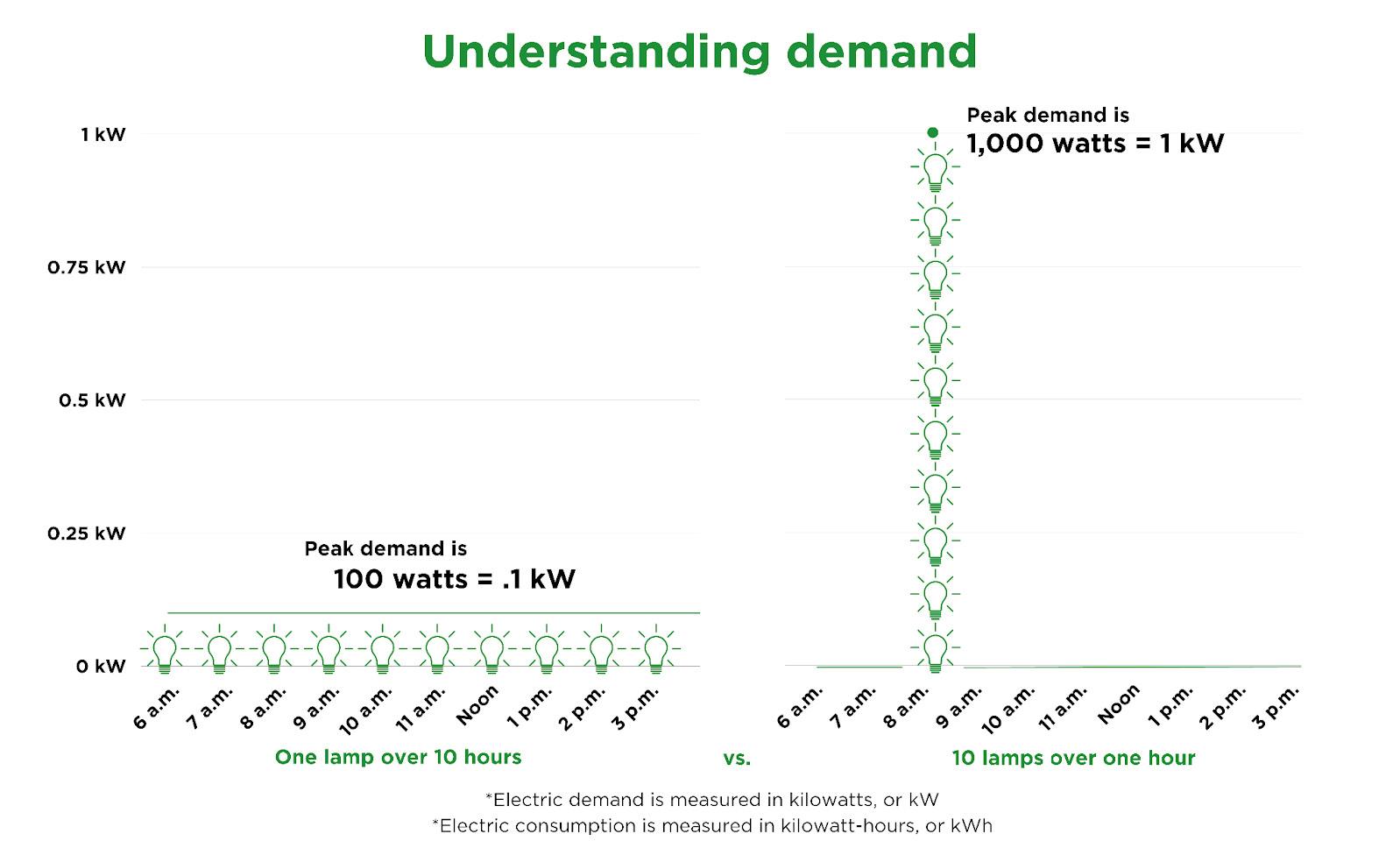
Every residential account will see a residential demand charge on its bill. This charge reflects your household’s contribution to WEC’s highest electricity demand during peak hours, from 6-9 a.m. in the coldest months. Currently, the rate is $4.00 per kilowatt, or kW.
For example, if your household reaches a maximum demand of 10 kW during this peak period, your bill will include a $40.00 residential demand charge ($4.00 x 10 kW = $40.00). Thanks to advanced metering technology, this demand rate is calculated using precise data.
The residential demand charge is tied to the fixed costs associated with meeting peak demand year-round. Even though technology and energy efficiency have improved, peak demand hit an all-time high on Dec. 24, 2022, which led to higher capacity costs in 2023.
Thanks to demand pricing signals, communication and the participation of members like you, our system saw a lower peak in the winter of 2024. However, demand costs remain high due to factors like inflation, national policy and regulations and other economic conditions.
To ensure reliable service and promote the long-term financial health of our cooperative, we’ve adjusted our rate structure related to demand. Billing for residential demand creates a fairer way to cover a portion of these costs, benefiting all members.
Billing for demand helps us more accurately reflect the true cost of providing electricity to residential members. Demand plays the biggest role in determining our wholesale energy costs, including the cost of maintaining the electrical grid and the price we pay to our power supplier, PowerSouth Energy Cooperative.
By billing based on residential demand, we aim to distribute these costs among members more fairly. Households are charged according to their precise contribution to peak demand rather than applying the same charge to everyone. This approach keeps rates fair and supports the long-term stability of our cooperative.
Billing for demand supports WEC’s mission of providing reliable and affordable energy. As a power distributor, we are required to purchase enough capacity from PowerSouth to meet members’ needs, even during moments of highest demand. This strategy also aligns with cooperative principles, encouraging long-term stability and ensuring everyone pays a share tied to their contribution.
The residential demand charge represents our commitment to individualized rates reflective of actual demand. Simultaneously, we’ve reduced our base energy rate—the price you pay for total energy consumption—by 15%. This is designed to encourage members to reduce their demand to save on their bills.
Yes, you can actively contribute to lower peak demand on WEC’s system during the winter months from 6 to 9 a.m. Here’s how you can make a difference:
Managing power costs is critical. Here’s how WEC and PowerSouth Energy Cooperative are
acting to curtail increases:
This year’s investments reflect our long-term thinking. We’re planning for tomorrow and the years ahead, guided by our commitment to providing reliable and affordable energy. Your continued trust and support make it possible.
We believe these strategies are a testament to that promise, and we thank you for your continued trust and support.
If you have any other questions or concerns, we’re here to help.