Share

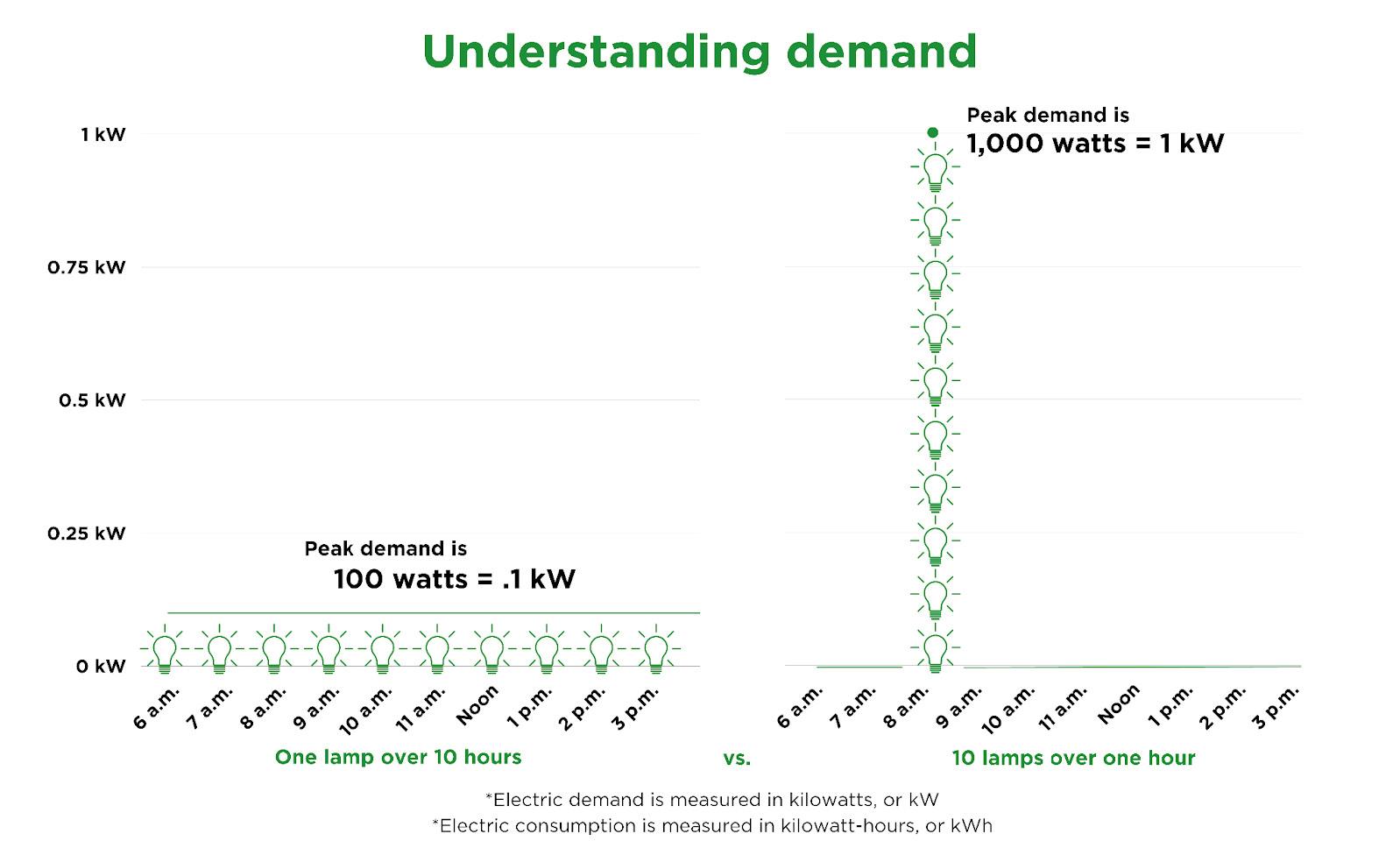
Demand refers to the amount of electrical power needed at a specific time. Rather than being about monthly consumption, demand reflects the maximum power needed at any given time. For example, if you turn on several high-energy-consuming appliances simultaneously, such as the heater, oven and washing machine, your demand at that moment spikes.
Peak demand, our highest need, impacts the cost of wholesale power. We must have enough capacity to meet the power demand of all homes and businesses, even when that demand spikes. For Wiregrass ElectricCooperative, this peak occurs consistently from 6 to 9 a.m. during winter.