
Share

Electricity was life-changing when first introduced to rural areas. The tools used by linemen, however, were pretty simple by today’s standards.
Linemen used climbing spikes, or gaffs, strapped to their boots to help them climb utility poles. A belt with a strap anchored them to the pole. Tools not hanging from their belts were hauled up the pole by a rope. Hard hats didn’t become part of the gear for Wiregrass Electric Cooperative linemen until the 1950s. Bucket trucks came much later.
Since the cooperative’s beginning in 1939, the equipment and gear used by linemen have evolved substantially, with safety at the forefront.
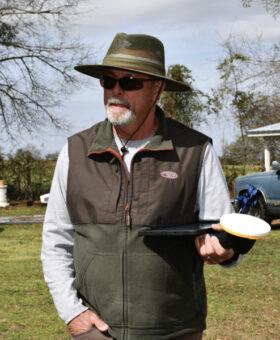
Clint Hatcher, who plans to retire in July, started on Wiregrass Electric Cooperative’s right-of-way crew in 1992. Back then, there was no thought given to the risks of wielding a chainsaw on the job. You just did it.
“Now, you fire up a chainsaw, you’re supposed to put on a pair of chaps,” Hatcher says. “We didn’t know what chaps were back then.”
Hatcher recalls losing more than one glove while loading a chipper to mulch limb debris. Wiregrass, like many cooperatives, now uses contractors to control rightof- way vegetation.
Ben Miller joined Wiregrass Electric Cooperative 33 years ago, and he says today’s ongoing right-of-way maintenance — done annually on a 4-year cycle — has a huge impact on the efficiency of crews working on lines and helps reduce the frequency of outages.
Safety gear has seen a lot of improvements, both Hatcher and Miller say. Today’s uniforms offer fire protection, and personal protective equipment like hard hats, safety glasses, and insulated rubber gloves is not optional. Even when inside a bucket, linemen wear a safety harness and a strap for protection. Gaffs are still used when climbing a pole is necessary. Rubber sleeves and hot sticks have also made the job safer.
The cooperative’s bucket trucks have improved by leaps and bounds since Miller and Hatcher started out.
The trucks used by crews in the early 1990s were new for the time, but the bucket lifts attached to the trucks were from the 1970s. Miller says that was the case with a lot of equipment back then — the cooperative made do with what it had. Now, equipment is replaced more regularly, and Miller says there is a lot more emphasis on linemen's safety.
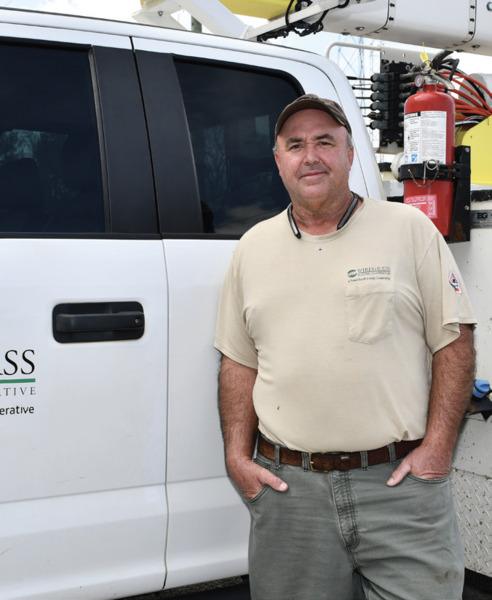
“They don’t skimp on buying safety stuff,” Miller says. “No. 1 is to do it safely and go home.”
Hydraulic and electric crimpers used on thick power lines have helped spare many a lineman’s shoulder from the pain once caused by gripping manual crimpers, Hatcher says.
Technology has actually changed linemen’s work in the more than 30 years Hatcher and Miller have been on the job with Wiregrass Electric Cooperative.
A plant specialist for nearly 8 years, Hatcher meets with members to map and stake locations for new service requests. In the field, he uses a tablet with a global navigation satellite receiver attached so he can collect GPS points and mark where poles and lines need to be located, although he still hammers a stake in the ground. From the office, Hatcher creates a work order with all the materials and GPS points for a crew to do the actual installation.
2-way radios and older mobile phones have been replaced with smartphones. The cooperative’s Supervisory Control and Data Acquisition, or SCADA, system can signal a problem with a power line and isolate the issue sometimes before an outage call is even received.
“There’s a lot of stuff that we used to have to do that we don’t have to do anymore,” Miller says. “For example, you have a line out, you’d always have to ride that line and then go all the way to wherever the breaker was to close it. Now, with SCADA stuff, they can close it from the office.”
As a serviceman, Miller handles power cut-on and cut-off requests, outdoor lighting, and troubleshooting outages. There are tasks he once did as a lineman that he does not miss today.
“When I started this job, there was a lot more to this job than there is now because of technology,” Miller says. “We used to beat on doors and collect money when people hadn’t paid their bills.”