
Share
Following the successful restoration of power to all members who could safely receive service after Hurricane Isaias, Wiregrass Electric Cooperative (WEC) is extending its appreciation to the vendors, contractors, mutual aid crews and community partners who played an important role in the cooperative's recovery efforts.

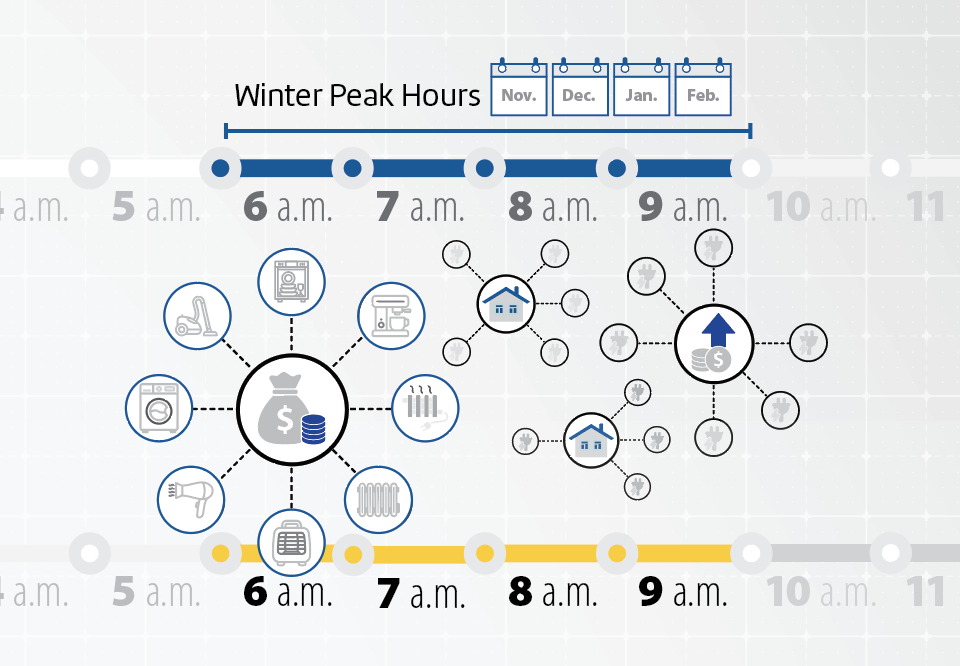
During the coldest weather is when Wiregrass Electric Cooperative is historically most likely to face its highest demand for electricity use, a system event known as peak demand.
Previous peak events show these high-use times are most likely to happen between Nov. 1 and Feb. 28 and between the hours of 6 and 9 a.m.
WEC works closely with its wholesale energy partner, PowerSouth Energy Cooperative in Andalusia, to monitor weather conditions and alert members to the possibility of peak demand periods. The cooperative sends out peak demand alerts through social media outlets, text messages and emails so members can take action to lower their household energy usage during the event.
After all, keeping energy use low during peak events is good for both the cooperative and members.
The system’s annual peak is used to determine what WEC will pay for wholesale power — a rate that resets each year depending on the previous year’s peak demand.
Wiregrass members pay a monthly demand fee based on their contribution — how many kilowatts of electricity they used — during the cooperative’s peak. The demand expense rate is currently $4 per kW for members.
There are ways, however, that members can reduce their electricity use during peak demand times.
Heating the home
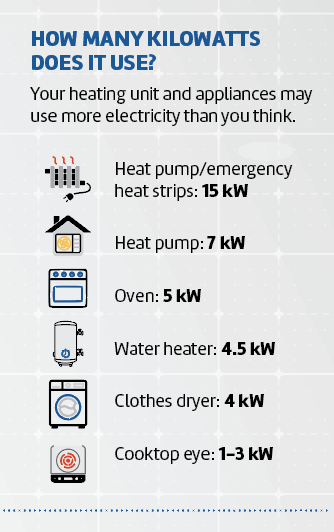
We don’t want anyone to freeze, but heating systems are the biggest energy users in a household. And if your system includes emergency or auxiliary heat strips — which is likely if you have a heat pump — it could use even more energy during extremely cold weather.
Heat pumps work by pulling warm air from outside, so if outdoor temperatures get cold enough, your system could switch to auxiliary or emergency heat. Check your thermostat for an emergency heat setting to know for sure.
A programmable thermostat can control a home’s temperature setting during peak hours. When you know there is a possible peak event coming, set your thermostat to get your house a little warmer in the time leading up to when the peak hours begin and then drop the temperature, so the heat doesn’t kick on as much during peak hours. A well-insulated home should hold enough heat for those few hours.
If you don’t have a programmable thermostat, manually adjust the temperature, at least between 6 and 9 a.m.
Reduce hot water use
Each time an electric water heater switches on to warm the water in its tank, it can use up to 4.5 kW, making water heaters the second-largest source of household energy consumption.
Keeping your tank’s temperature set at 120 F should balance comfort and energy savings. A tankless water heater will save on energy required to keep a tank warm, but the instantaneous energy draw when you turn hot water on at your faucet could mean a huge power surge during peak times.
Try to avoid using hot water during those peak morning hours. Take showers at night and don’t run your dishwasher or a load of laundry on a hot setting.
If possible, have a timer installed on your water heater and set it so it does not cycle on and off during peak hours. Most water heater tanks hold enough water to get you through the morning if needed.
Don’t tower your power
Simultaneously running multiple high-energy appliances — such as your clothes dryer, dishwasher and oven — can spike your demand on the system. It’s best to avoid such use during peak demand times.
Use the toaster or microwave instead of the oven or stove. If you need to use your electric range, try to keep cooking to the stovetop, which uses less energy than the oven.
Don’t run your dishwasher during peak hours and avoid doing laundry if possible. Even with energy efficiency-rated appliances, a dishwasher, as well as a washing machine, can consume a lot of electricity. Plus, if you wash on a hot cycle, the water heater adds to the energy consumption, almost doubling it.
If you must use appliances, operate them one at a time to keep your usage in a level range.