
Share

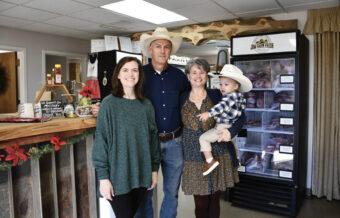
When Bert Woodham calls for his sheep, fuzzy heads pop up from the tall grass of the field where they graze. The sheep — with a few goats in the mix — trot toward him as a synchronized flock.
The laying chickens at Bert Woodham Farms respond similarly when Woodham’s side-by-side approaches their laying area. They crowd the farm vehicle, andit’s not unusual for a chicken to try to sneak a ride.
Woodham says he values the farm’s animals, and he likes to think they respond to him the way they do because they’re healthy. They’re not pets, however. Laying chickens are raised for their eggs, while broiler chickens, hogs, sheep, and cattle are raised for their meat. Bees kept on the farm produce honey.
At Bert Woodham Farms, value and care extend to the land itself. The farm, a Wiregrass Electric Cooperative member along with the family themselves, is expanding with the opening of a processing facility and a larger farm store.
Bert Woodham Farms follows an approach known as regenerative agriculture, which incorporates techniques focused on restoring and improving the entire ecosystem of the farm.
“We don’t do things the way we’ve always done them because we’ve always done it that way,” Woodham says. “There needs to be a reason why we’re doing the things the way we do it.”
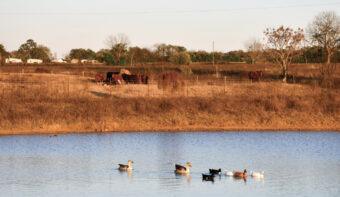
Regenerative farming practices include not tilling soil to prevent erosion, rotating crops, planting a variety, and even planting cover crops to retain moisture and nutrients in the soil. At Bert Woodham Farms, livestock animals are rotated every one to 2 days among different pastures to prevent overgrazing and to reduce parasites. This allows the pasture to rest for 28 to 30 days before moving them back. Grass grows tall in pastures, and weeds are left untouched. Insecticides are not used, so helpful insects like dung beetles can do the work nature intended — burying animal feces and removing breeding sites for horn flies while fertilizing the soil and improving the forage quality of the pasture itself.
“It’s about farming more like nature would have it if man weren’t involved,” Woodham says. “In other words, trying to mimic nature with the cows.”
Good land and pastures mean healthy animals, Woodham says. Healthy animals lead to better products, which the Woodhams sell at JBW Farm Fresh on U.S. 84 near Bay Springs Road. At the store — with its “From Our Pasture to Your Table” slogan — shoppers can find a selection of beef, lamb, mutton, chicken, and pork products.
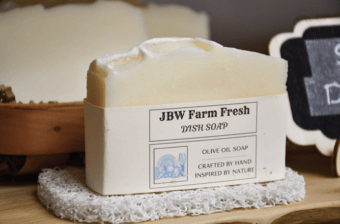
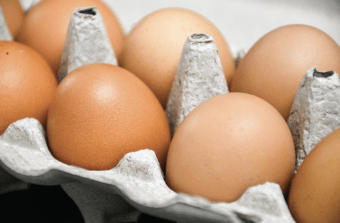
The farm store also sells its eggs by the carton, bone and soup broths, raw honey, and jars of relishes and sauces. Tallow, or animal fat, is used to make soaps, deodorants, lip balm, lotions, and skin-care products.
All of the farm’s products will also be sold at the processing facility when it opens, which is planned for February. The new facility, located on Pilgrim Road off County Road 68, is large and will include meat processing, freezer rooms, a smoker, new equipment to cook down bones for broth, an egg-cleaning station, a farm store, and a kitchen to prepare food products and even serve to-go meals.
Bert and his wife, Lisa, have been in business for years with Woodham’s Cabinet Shop, a business founded by Bert’s parents. Bert and Lisa purchased land to start Bert Woodham Farms in 2016 and began adopting regenerative agriculture practices in 2017, adding South Poll cattle, as well as goats, sheep, chickens, and hogs over the years. They opened their farm store, JBW Farm Fresh, in 2022 and added honey bees in 2023. Construction on the new processing facility began in 2025.
Their daughter, Lindsey Fountain, who owns Flour Sack Bakery in Dothan, is joining her parents in the farm business full-time, using her skills to create bakery items made from healthier and natural ingredients. It’s a big step but also exciting, Fountain says.
“Over the years, I’ve had more and more customers ask about doing things that don’t have dyes and don’t have certain things, and they’re trying to eat healthier now,” Fountain says. “I’m proud of what I have been doing, but I’m really excited to be doing something that is going to be healthier for people, and it makes me feel good.”
For Woodham, having his family involved in the business means a lot. He says he knows others may not understand the regenerative practices used on the farm, but he’s firm in his faith that it is a good approach and can be successful. “God has richly blessed us. He’s richly blessed our family,” Woodham says. “Too often, we eat food that we ought not to eat. We need to be careful what we eat, and we’re trying to grow products on the farm that we want to eat.”