
Share

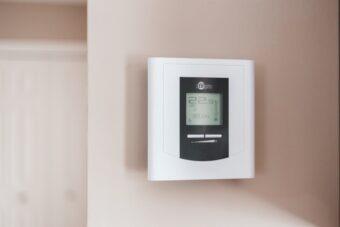 As a member of Wiregrass Electric Cooperative (WEC), you may have received alerts in the winter about expected peak-demand events.
This year, we hit our peak demand of 142 megawatts on January 22. You might remember that time, an unprecedented 5 to 8 inches of snow fell across the Wiregrass, and combined with frigid temperatures. Our current peak, however, was still lower than our record of 144 MW set in December 2022, which took effect in 2023.
You may wonder why it matters. Our cooperative, as well as other utilities, buys enough capacity from our wholesale provider to meet our members’ energy needs at any given time, which is based on when demand is at its highest.
For Wiregrass Electric, peak demand typically happens on the coldest day of the year between the hours of 6 and 9 a.m., November through February.
Earlier this year, the cooperative adjusted rates to account for that peak demand expense more fairly. We dropped the energy charge to $0.0996 per kilowatt-hour for actual usage during the billing cycle. We increased the demand expense to $2.50 per kW.
Our advanced smart meters can accurately measure and bill for demand, and members are billed based on their contribution to our system’s peak demand.
The focus on demand encourages behaviors that reduce peak-demand levels.
Members can control their energy consumption during peak-demand times, possibly reducing that portion of their bill and what our cooperative pays for wholesale power. It’s why we send out alerts about possible peak-demand events. You pay based on how much energy you use when demand peaks.
In the last five years, the cost of doing business has soared in the electric utility industry with supply- chain delays and price increases on infrastructure like poles, wiring, transformers and fleet vehicles, such as bucket trucks. The cost of power generation has also increased. In the most recent budget year, WEC paid $39,600,000 for wholesale power, up more than 5% over the previous year. The amount we pay each year has steadily climbed since 2021.
All the while, energy demand keeps going up across the country, driven in part by industrial users and large data centers.
Electric utilities across the U.S. experience peak demand at different times.
Wiregrass Electric is a winter-peaking system due to our large residential load.
Demand is expected to keep growing. The U.S. set records during the summer when hot weather and rising demand pushed the country’s peak up to 759,180 MW, according to the U.S. Energy Information Administration.
Information Administration. It’s a complex issue, and we work closely with our wholesale provider, PowerSouth Energy Cooperative, to gauge when peak-demand events could happen so we can alert our members
Here’s an example we’ve used in the past: Just like a highway during rush hour needs more lanes to prevent congestion, more energy resources and capacity are necessary during peak demand to keep a steady flow of power going to our members. It all goes back to providing reliable energy for our members.