
Share

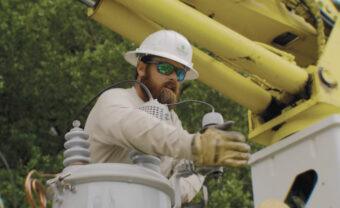
Being a lineworker has unique job requirements.
Yes, nowadays there are bucket trucks to lift lineworkers into the air, but at some point, they will have to climb a pole. Lineworkers must go out in all sorts of weather to work around high-voltage electricity.
April is Lineworker Appreciation Month, and April 18 is National Lineworker Appreciation Day — a day designated to honor electrical lineworkers and the challenging tasks they must perform. But what does it really take to do the job?
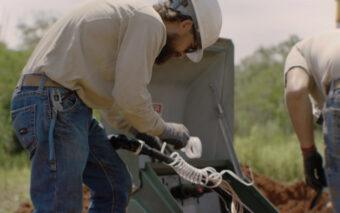
“To be a lineman, it takes a lot of dedication, a lot of time away from home,” says Britt Caldwell, a Wiregrass Electric Cooperative (WEC) lineworker for 11 years. “You’ve got to love the job.”
And, you will have to work in the elements — all the elements.
“When it’s raining or storming, we have to work,” Caldwell says. “When it’s hot, it’s hot. When it’s cold, it’s cold. We’re outside. You have to be dedicated to be a good lineman.”
WEC lineworker Mark Dillard says lineworkers must be prepared to tolerate the heat and the cold. The thick rubber safety sleeves and gloves they wear can make the hot months in Alabama that much more sweltering.
“When everybody’s running inside because of the bad weather, you know you’ve got to run outside,” Dillard says.
Lineworkers might miss ballgames, birthday parties, and family gatherings due to outages. When outages happen late at night or in the early-morning hours, lineworkers report to work.
“You have got to be dedicated to the job because you get called out at all hours of the night and at different times during rain and thunderstorms,” says WEC crew foreman Johnny Hudson, who has worked 21 years as a lineworker. “You’ve got to be dedicated and not mind working outside.”
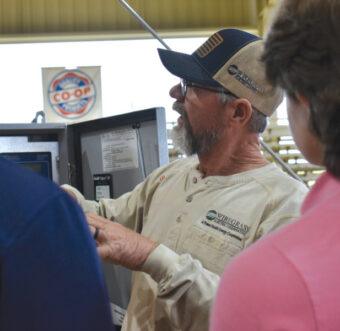
Working with electricity, of course, is dangerous. Lineworkers are equipped with fire-retardant clothing and safety equipment, but staying safe on the job also requires patience and focus, especially when each distribution line carries 7,620 volts of electricity.
“It’s not a race,” Caldwell says. “You have to pace yourself, and you have to use a lot of common sense. You come to work 1 day, and you've got a lot going on at home, family problems, whatnot — it could take a toll on you. You have got to have a clear head whenever you’re doing line work. When you’re in the bucket every day, you need a clear head.”
Lineworkers can’t have a fear of heights, Dillard says.
“You can’t be scared of a challenge as far as something being a little bit dangerous,” Dillard says. “You’ve got to be able to think on your feet, think ahead, look out for yourself as well as your partner.”
It takes the right attitude and work ethic to be a lineworker, Hudson says.
“They have to have a good mindset and be willing to work hard and pay attention to what they’re doing because it is a dangerous job if you don’t do it right,” he says.
Line work becomes more than a job, Caldwell says, especially when working to restore power following a natural disaster like a hurricane.
“When you go off to a storm and people have been without power 7 to 10 days, you can really brighten someone’s day when they’ve been without power for a week,” he says. “That gives you a lot of joy and self-reflection.”
Dillard remembers working with other WEC lineworkers to provide help in the Gulf Coast states hit by Hurricane Katrina in 2005. The experience, he says, was 1 of his most rewarding moments as a lineworker.
“The people who were affected, some of them had been out for over a month,” Dillard says. “When you are able to turn their lights back on and hear how happy and joyful they are, that’s what I like. I know how bad I get when my power is off. Could you imagine being off in the summertime for a month and how that disrupts your whole life? That’s the rewarding part. Every day, what we do is no big deal, but when you can go off and help somebody like that, it makes a smile come on your face.”