
Share

Electricity changed rural America. Those who lived without power — farmers, ranchers and rural residents — finally had access to electricity. Communities and entire regions were transformed.
Wiregrass Electric Cooperative crews at work circa 1950s and 1960s.
Signed into law on May 20, 1936, the Rural Electrification Act was one of the more life-changing laws in President Franklin D. Roosevelt’s New Deal reforms. Before the REA, only 10% of U.S. farms and rural homes had electricity, according to the National Rural Electric Cooperative Association. By the 1950s, more than 90% of farms had electricity.
The REA provided the Rural Electrification Administration, initially created as a relief agency, with the ability to issue low-interest loans or loan guarantees covering the cost of infrastructure to run power to rural homes, farms, schools and businesses. Electric cooperatives organized across the country to meet the needs of rural Americans.
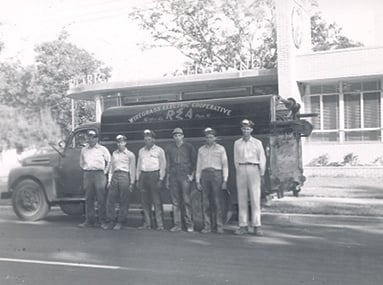
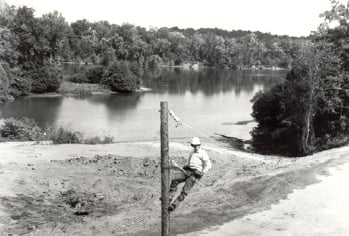
Three years after the REA was authorized, Wiregrass Electric Cooperative was organized to provide electricity to rural communities in Southeast Alabama. WEC is one of the many electric cooperatives formed after the REA that’s still operating. Today, there are more than 900 electric cooperatives in the country serving 42 million Americans, according to NRECA.
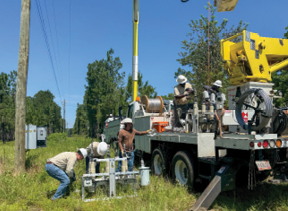
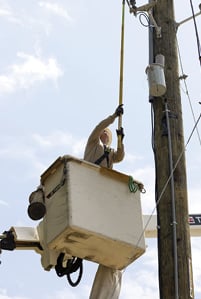
The Rural Electrification Administration was reorganized in 1994 and now operates as the Rural Utilities Service under the U.S. Department of Agriculture. Its programs still provide for investment in rural electric generation, transmission and distribution systems.